

Childcare drop-offs are back, and so are the big feelings.
If you’re doing the morning handover with a child who clings, cries, or pleads, you’re not alone.
The good news? There are small, practical things parents and educators can do that make separation feel safer, calmer, and more positive for everyone.
Whether it’s childcare, kindy, or school, separation can be one of the hardest moments of the day for children and adults. Many families hear the well-meaning reassurance from staff who are about to care for their child:
“Don’t worry – they’ll be fine once you’ve gone.”
And yes, many children do settle.
But that doesn’t mean the moment doesn’t matter.
A child and parent can look “fine” five minutes later, but their nervous system is still recovering and often that stress is carried into the rest of the day too. But with a few little tweaks, this doesn’t have to be how we or our children start the day.
Why drop-offs can feel so intense
Separation from a primary caregiver is one of the biggest emotional tasks of early childhood.
When children cry, cling, freeze, shout, or refuse to enter, they are having a nervous system response to something that, in that moment, feels threatening.
Children cope best when they feel three things:

The 3 C’s
- Consistency (I know what’s happening)
- Control (I have some control and choice)
- Connection (I am safe and people will help)
When those three are missing, the brain can move into threat mode and separation becomes harder.
Below are simple ways parents and educators can support the 3 C’s.
1) CONSISTENCY: “I know what’s happening”
What parents can do
Children settle faster when we follow a predictable routine.
It’s often the little things that help most:
- Breakfast before we get dressed or vice versa
- Parking in the same place
- Walking the same route
- Having a goodbye phrase or routine (5 hugs, high fives, special handshake)
Consistency helps the brain recognise:
“This is the routine. I know what happens next.”
What educators can do
Many children are dropped off with little understanding of:
- What day it is
- What’s happening today
- When they’ll be picked up
And most young children can’t tell time, so it makes it even harder for them to know when they will be going home.
Educators can help by helping children understand the structure of the day in a child-friendly way, such as:
- A visual timetable
- A “first / then / next” board
- A predictable daily rhythm
- A simple phrase like:
“After afternoon tea, recess number 2 – your grown-up comes back.” - Or supporting them to know the time or what the clock will look like when its lunch and then pick up time.
Remember its the principle of Consistency and routine that matters not the fine detail about how this looks for you.
2) CONTROL: “I have some choice”
What parents can do
Children cope better when they feel they have some control.
This doesn’t mean removing the boundaries, It means offering little choices
For example:
- “Shall we have 2 hugs or 5 hugs today?”
- “Should we walk in or hop in?”
- “Do you want to hold my hand all the way to the door or all the way to the mat?”
- “Where do you want to sit when you go in?”
These choices don’t remove separation but increase a little ones sense of control and choice, which in turn reduces anxiety.
What educators can do
Educators can offer a gentle sense of control immediately on arrival.
A simple “landing routine” might include a Daily way they like to be greeted
- Ask them where they would like to go first while they settle. “Would you like to sit by the window or the mat?”
- Offer one simple choice, maybe they want to help you with something “Would you like to help me with a job first?”
- Guide them into a familiar activity “Would you like to start with Lego or books?”
Even a 2-minute routine can reduce drop-off distress over time.
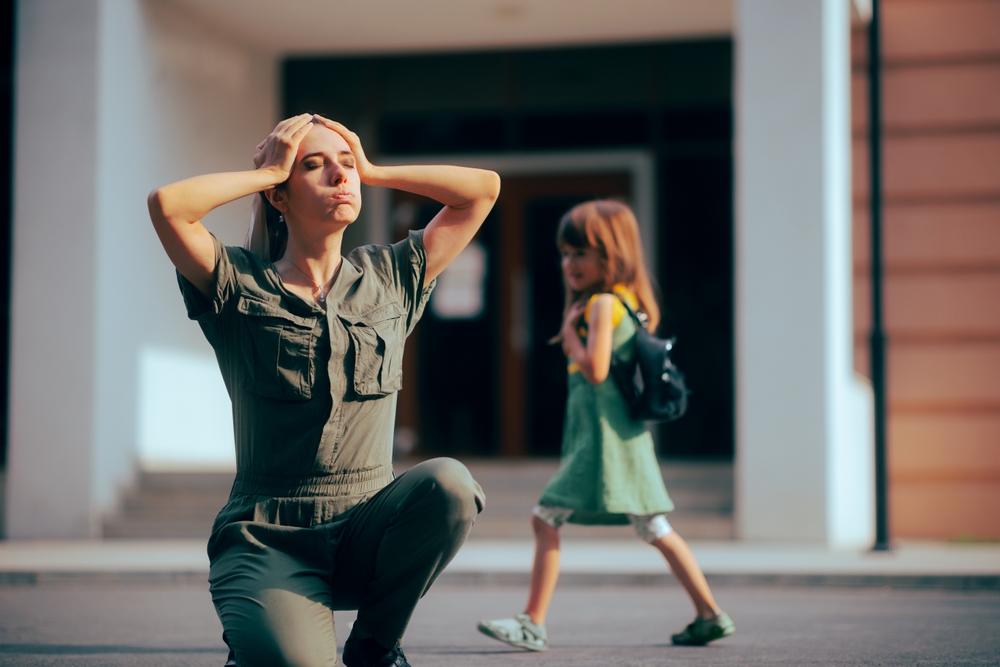
3) CONNECTION: “I feel safe with the adults around me”
What parents can do
It can be tempting to say:
“You’ll be fine.”
But in that moment, children often don’t need reassurance – they need to feel heard.
Try:
- “I know this is hard right now.”
- “You wish I could stay.”
- “It’s okay to feel sad.”
Validation helps the nervous system settle and then you can offer something to help.
Comfort objects help connection continue after separation
A transition object can be a powerful support for separation.
This might be:
- a teddy
- a small soft toy
- a sensory tag
- a special note in their pocket
- a love heart drawn on their hand
- a discreet fidget item
It gives children something physical to hold while they adjust – and it often helps most when it’s used before distress peaks (for example, in the car on the way).
What educators can do
Educators are often supporting children through the moment they feel most unsafe – while also holding a whole room together.
Small moments of connection can be powerful:
- warm eye contact
- calm voice
- gentle presence
- predictable steps
- a familiar activity
Many children also benefit from a calm corner
- a soft toy
- fidget-friendly items
- deep pressure (e.g., cushion squeeze, wall push)
- a simple breathing or grounding prompt
A gentle note about grounding
Grounding activities and sensory comfort tools are there to help children feel safe, settled, and supported – not as a way to distract them while a parent slips away.
It can be really tempting to sneak off once your child is engaged. Many parents are advised to do this (and many of us have tried it), especially when mornings are busy and emotions are high.
But for many children, sneaking away can increase separation anxiety over time, because they start to worry:
“Will they disappear again?”
If you do need to leave quickly, try to keep to your routine – even if there are tears. A short, warm goodbye is usually kinder than your child suddenly realising their safe person has gone without warning.
The goal isn’t a perfect drop-off everyday.
It’s helping children’s little lives feel predictable, consistent and safe in the long run.
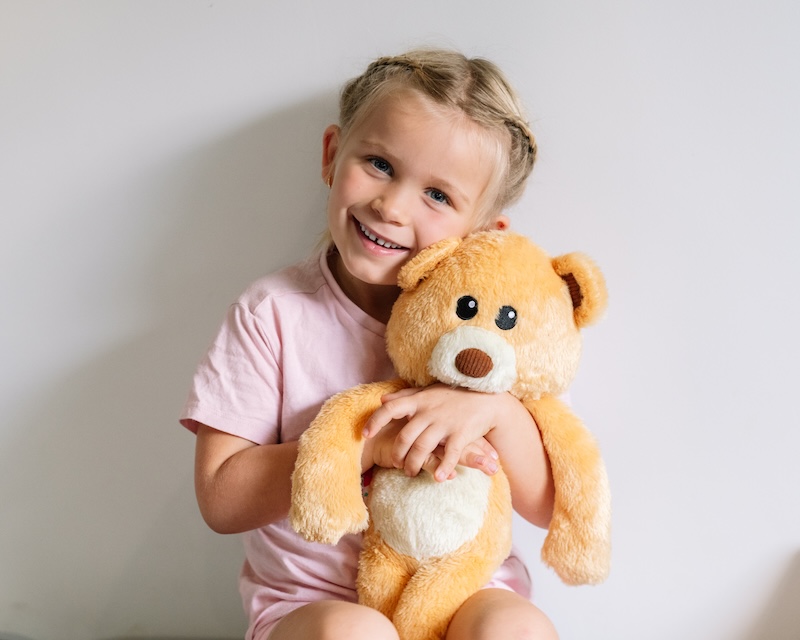
How the Tedology Bear supports drop-offs (for home, childcare and classrooms)
Tedology Bear was created for everyday moments exactly like this – the tricky transitions, the big feelings, and the times children need comfort while they build confidence.
The bear supports children through drop-offs by combining:
- sensory comfort (a lightly weighted body, fidget-friendly paws, and calming textures)
- a predictable routine (children can use the same grounding activity each morning)
- simple guided regulation skills via a press-button audio device (such as noticing colours and other gentle grounding prompts)
Many schools and early childhood services are now exploring Tedology Bear as part of:
- morning settling routines
- calm corners and regulation spaces
- transition support for anxious children
- classroom wellbeing routines
- emotional literacy and regulation programs
A final thought
Drop-off tears are common but they don’t have to be overwhelming.
When parents and educators work together to create consistency, control, and connection, children learn a powerful message:
- “It’s okay to feel sad.”
- “People are helpful.”
- “I can cope with hard things.”
Wishing more settled drop-offs for all children, families, carers, and the staff who support them every day.

About the Author: Dr Louise Mansell
Dr Louise Mansell is a psychologist with over 15 years of experience supporting children and families. Her work focuses on helping children understand their emotions, build confidence, and develop practical skills they can use in everyday life.
Through her experience working alongside parents, educators and care teams, Louise has seen how powerful simple, consistent tools can be in helping children communicate and regulate their feelings. This understanding led to the creation of Tedology – a child-led approach that supports emotional learning through connection, routine and gentle guidance.
Louise is passionate about making emotional support accessible outside of formal settings, empowering the adults around children to feel more confident in responding to big feelings when they arise.