

Recently, much of the world found itself watching a small monkey named Punch. His story went viral, and people everywhere followed his progress closely. My ex-army brother asked whether I had seen him, while my young son rushed to update me when Punch found a friend. Across generations and backgrounds, we were all watching and waiting for the same thing.
We were waiting for Punch to find connection.
To find relationship, safety and a sense of belonging.
Instinctively, we understood that survival was not just about food or shelter. What seemed to matter most was that this small animal found a relationship, a safe base and a sense of belonging. When he did, there was a collective sense of relief. Attachment did not feel like a luxury or something pleasant to have; it felt essential.

Yet this is something we can sometimes forget when thinking about children.
For many children, particularly those living with uncertainty, adversity or unsafe experiences, school may be the most predictable environment in their lives. Education settings can become the place where a child encounters consistency, safety and connection, sometimes for the first time.
A teacher, education assistant or member of school staff may quietly become that child’s safe person – the adult who notices them, sees them and helps them feel secure enough to engage with the world.
Often this role is not formally named. It happens through everyday moments. Through a consistent greeting, a calm presence, a shared joke, or simply an adult who remembers something important about a child’s day.
These small relational moments can carry enormous weight.
This is why relationships cannot be viewed as an added extra within education. Safety, connection and co-regulation are not simply pastoral considerations sitting alongside learning; they are the foundations that make learning and engagement possible.
When a child’s nervous system feels overwhelmed or uncertain, their brain shifts into survival mode. Thinking clearly, concentrating and absorbing information become much harder. Before learning can take place, the nervous system often needs to return to a place of calm.
Connection helps make that possible.
For children whose earlier experiences with adults have been unpredictable or frightening, this relational approach is particularly important. These children may arrive at school feeling watchful, uncertain or quick to react. Their behaviour can sometimes be misunderstood as defiance or lack of effort, when in reality their nervous system is trying to protect them.
A calm, steady adult who responds with curiosity rather than judgement can begin to change that experience.
Importantly, the value of this approach does not stop with children who have experienced trauma. When schools embed relational safety into everyday practice, all students benefit. Classrooms feel calmer. Interactions become more respectful. Children experience school as a place where they belong.
The benefits extend to adults as well.
Working within an environment where interactions are intentional and grounded in an understanding of human attachment can support adult wellbeing too. Helping others, offering connection and responding with curiosity moves our own nervous systems toward calm and purpose. Trauma-informed schools therefore support not only student wellbeing, but also the emotional health of the adults within them.
Perhaps one of the most reassuring things about trauma-informed practice is that it rarely depends on large programmes or additional workload.
More often, it is expressed through small, intentional interactions woven throughout the school day and reflected within behavioural policies.
A child who feels noticed when an adult comments on their heavy bag, observes that they might have grown over the weekend, or offers a small choice that provides a sense of control can experience these moments as deeply regulating.
For children whose lives may otherwise feel unpredictable, consistent adults who notice and respond with warmth become powerful anchors.
A whole-school trauma-informed approach can be understood as a “do no harm” model. It embeds relational safety into policies, procedures, behaviour responses and daily routines, moving schools beyond being trauma-aware toward becoming intentionally trauma-informed.
It recognises that behaviour often communicates need, that connection regulates nervous systems, and that relationships are not a reward for good behaviour but a foundation for growth.
Watching Punch reminded us of something deeply human.
Across cultures, ages and backgrounds, people instinctively hoped that this small creature would find safety through relationship. We recognised that survival alone was not enough. What mattered most was belonging.
Children are no different.
When they experience consistent, caring relationships with adults who notice them, guide them and remain steady in difficult moments, something important begins to shift.
They feel safer.
And when children feel safe, learning, growth and resilience become possible.
From Observation to Action
For me, these ideas are not theoretical. They come from years of working alongside children and families and noticing the small things that often make the biggest difference.
Again and again, I saw how children responded when they felt safe with an adult who was calm, curious and genuinely interested in them. I also noticed something else. Many children found it easier to open up when the focus was not directly on them. When conversation happened through play, drawing, storytelling or through an object they felt attached to, the pressure softened.
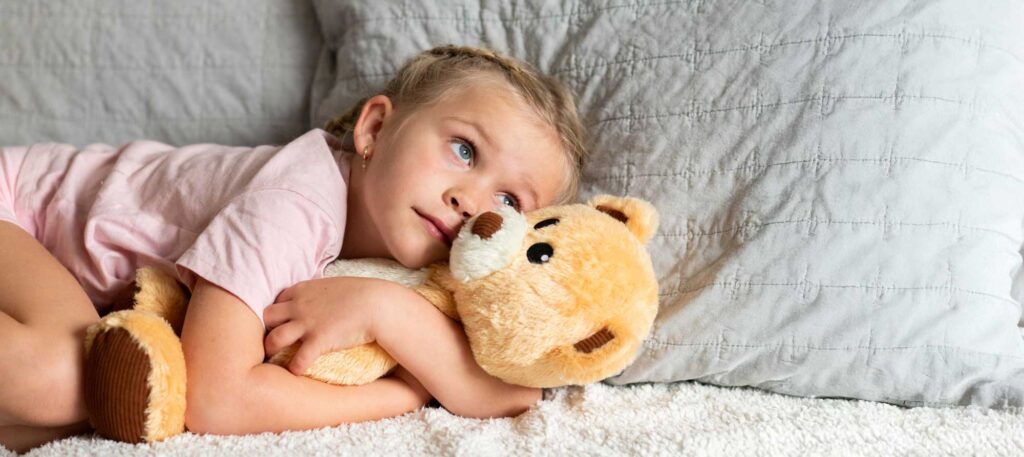
A teddy bear, it turns out, can be a powerful bridge.
Children naturally form relationships with comforting objects. They talk to them, hold them when they feel unsure, and turn to them when navigating big feelings. That instinctive connection can create space for children to explore emotions in ways that feel safer and more manageable.
These observations became part of my motivation for creating Tedology.
Rather than asking children to explain how they feel on demand, the Tedology bear offers a gentle starting point. Through sensory comfort, guided activities and playful prompts, it helps children notice emotions, practise calming strategies and begin to put words to what is happening inside them.
Most importantly, it allows children to build a relationship with something that feels safe and predictable. From that relationship, change can begin. When children feel supported and understood, even in small ways, they often find new confidence to express themselves and engage with the world around them.
In many ways, it comes back to the same thing we recognised when watching Punch.
Connection is not a luxury.
It is where growth begins.

About the Author: Dr Louise Mansell
Dr Louise Mansell is a psychologist with over 15 years of experience supporting children and families. Her work focuses on helping children understand their emotions, build confidence, and develop practical skills they can use in everyday life.
Through her experience working alongside parents, educators and care teams, Louise has seen how powerful simple, consistent tools can be in helping children communicate and regulate their feelings. This understanding led to the creation of Tedology – a child-led approach that supports emotional learning through connection, routine and gentle guidance.
Louise is passionate about making emotional support accessible outside of formal settings, empowering the adults around children to feel more confident in responding to big feelings when they arise.