

Recently, Tedology has been featured on the 7 News, recognised for its work embedding emotional literacy and regulation into childcare centres across Perth. It’s been wonderful to see this conversation growing, because the need has never felt more important.
As a clinical psychologist, one thing I speak about often is that when children learn to talk about and understand emotions from an early age, particularly before the age of five, it can have a powerful impact on their emotional wellbeing throughout life.
Children who can recognise feelings, express them safely, and learn simple ways to manage big emotions are better equipped to cope with stress and challenges as they move into adolescence and adulthood, so what are we waiting for?
There are many possible reasons being discussed regarding a decline in emotional literacy, from busier family lifestyles and increased screen time to less free play, all of which create growing pressures on both families and educators.
But what we do know is this: children learn best through play, everyday moments, relationships, and shared language.
The good news? You don’t always need a highly specialist programme, or hours of extra time to build these skills. Some of the most powerful emotional learning happens in small, ordinary moments.
The way we talk about emotions in everyday moments matters enormously, and having a shared language matters. Children begin to learn that all emotions are safe to feel and that there is something we can do to manage them.
Our Tedology bear does this in a range of ways. One example is “Feeling Time”: With a press of it Tummy it says:
“Look at the feelings on my feelings cards, I’ve got so many! Teddy bears think all feelings are okay. Which of the feelings have you had today?”
In just one tummy press and three sentences, play becomes so much more. This activity is:
Intentionally showing children a wide range of the most commonly experienced emotions on its feelings cards and building emotional vocabulary.
Normalising emotions and helping children understand that all feelings are acceptable, even difficult ones.
Encouraging emotional reflection, emotional sharing, and the habit of talking about feelings with safe adults over time.
To the child, it feels like a safe and enjoyable game to play with their bear. But underneath the play, important emotional learning is happening.
From the multisensory bear desigend with children, to the feelings cards, workbooks, educator training, and parent support, this toolkit was created to help make emotional literacy easier to embed into everyday life for families, carers and educators.
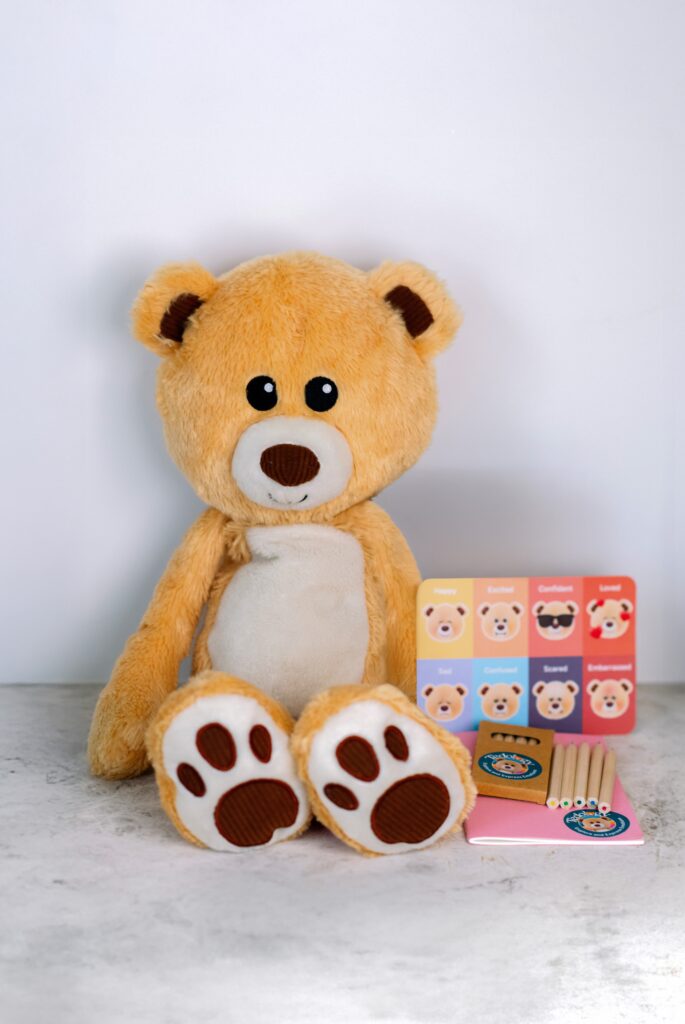
Tedology Bear Kit
The Tedology Bear combines sensory regulation features, guided audio activities and visual emotion tools to help children recognise, express and manage big feelings.

Meet Teddy
While the Tedology Bear may look like a teddy bear, it is actually an emotional wellbeing kit designed to help children talk about feelings, feel calmer, and manage big emotions through connection and play.

Meet the Author
Dr Louise Mansell
Dr Louise Mansell is a psychologist with over 15 years of experience supporting children and families. Her work focuses on helping children understand their emotions, build confidence, and develop practical skills they can use in everyday life.
Through her experience working alongside parents, educators and care teams, Louise has seen how powerful simple, consistent tools can be in helping children communicate and regulate their feelings. This understanding led to the creation of Tedology - a child-led approach that supports emotional learning through connection, routine and gentle guidance.
Louise is passionate about making emotional support accessible outside of formal settings, empowering the adults around children to feel more confident in responding to big feelings when they arise.